

News
-
Continuous Rolling Production Process
Continuous rolling tube (hereinafter referred to as MPM) process is a mandrel refers to wear long capillary column continuously through a series arrangement rack, rolling and rolling method conforms to become rolling mother pipe size requirements. Its distinguishing feature is the large capacity,...Read more -
Manufacturing principle and application of seamless pipe
Manufacturing principle and application of seamless pipe (SMLS): 1. The production principle of seamless pipe The production principle of the seamless pipe is to process the steel billet into a tubular shape under the conditions of high temperature and high pressure, so as to obtain a seamless pi...Read more -
Method of controlling outward folding of seamless steel pipe
The methods and solutions to control the outward folding are as follows. ①Ensure the quality of billets. There should be no subcutaneous bubbles on the surface of the billet, and the cold skin, indentation, and cracks on the surface of the billet should be cleaned up, and the edge of the groove a...Read more -
Identification methods and process flow of fake and inferior steel pipes
How to identify fake and inferior steel pipes: 1. Fake and inferior thick-walled steel pipes are prone to folding. Folds are various fold lines formed on the surface of thick-walled steel pipes. This defect often runs throughout the longitudinal direction of the product. The reason for folding is...Read more -
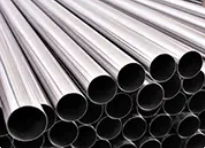
Why are the pipes used in industrial boilers all seamless pipe
What is a boiler steel pipe? Boiler steel tubes refer to steel materials that are open at both ends and have hollow sections with a large length relative to the surrounding area. According to the production method, they can be divided into seamless steel pipes and welded steel pipes. The specific...Read more -
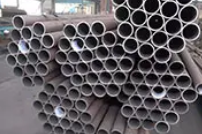
Details of high-pressure seamless steel pipe
What is a high-pressure seamless steel pipe High-pressure seamless steel pipe and high-pressure boiler pipe are a type of boiler pipe and belong to the seamless steel pipe category. The manufacturing method is the same as that of seamless pipes, but there are strict requirements for the type of s...Read more -
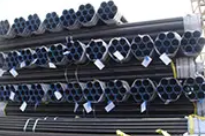
Process technology of thermally expanded seamless steel pipe
Diameter expansion is a pressure processing technology that uses hydraulic or mechanical means to apply force from the inner wall of the steel pipe to expand the steel pipe radially outward. The mechanical method is simpler and more efficient than the hydraulic method. Several of the world’s most...Read more -
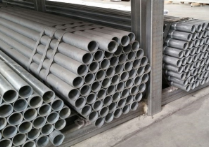
Seamless tube production equipment
There are many kinds of seamless tube (smls) production equipment according to the seamless steel tube production process. However, regardless of the rolling, extrusion, top pressing or spinning seamless steel tube manufacturing process, the billet heating equipment is inseparable, so the billet ...Read more -
Six processing methods commonly used for seamless pipes
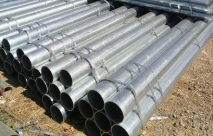
There are six main processing methods for seamless pipes (SMLS): 1. Forging method: Use a swage forging machine to stretch the end or part of the pipe to reduce the outer diameter. Commonly used swage forging machines include rotary type, connecting rod type, and roller type. 2. Stamping method: ...Read more -
Advantages of tubes
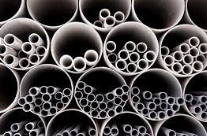
Advantages of tubes What is a tube? Tubes are ideal for transporting fluids or protecting electrical or optical connections and wires. Although there are slight differences, the words “pipe” and “tube” are virtually identical – in general, a tube has higher technical standards than a pipe. Today’...Read more -
What are the details of the thick-walled steel pipe before use
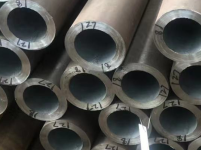
1. Thick-walled steel pipe cutting: According to the actual required pipeline length, the pipe should be cut with a metal saw or a toothless saw. When water welding is used in the cutting process, the raw materials should be protected accordingly. When cutting, fire-resistant and heat-resistant m...Read more -
The main purpose of thick wall steel pipe
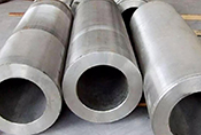
There is a great difference between a thick-walled steel pipe and a thin-walled steel pipe in terms of wall thickness. If the diameter of the steel pipe wall is greater than 0.02, we generally call it a thick-walled steel pipe. Thick-walled steel pipes have a very wide range of applications. Owin...Read more


